

Facebook
Twitter
Pinterest
Instagram
  •  Wedding Etiquette   •  Wedding Wishing Well Wording Australia | 5 Examples
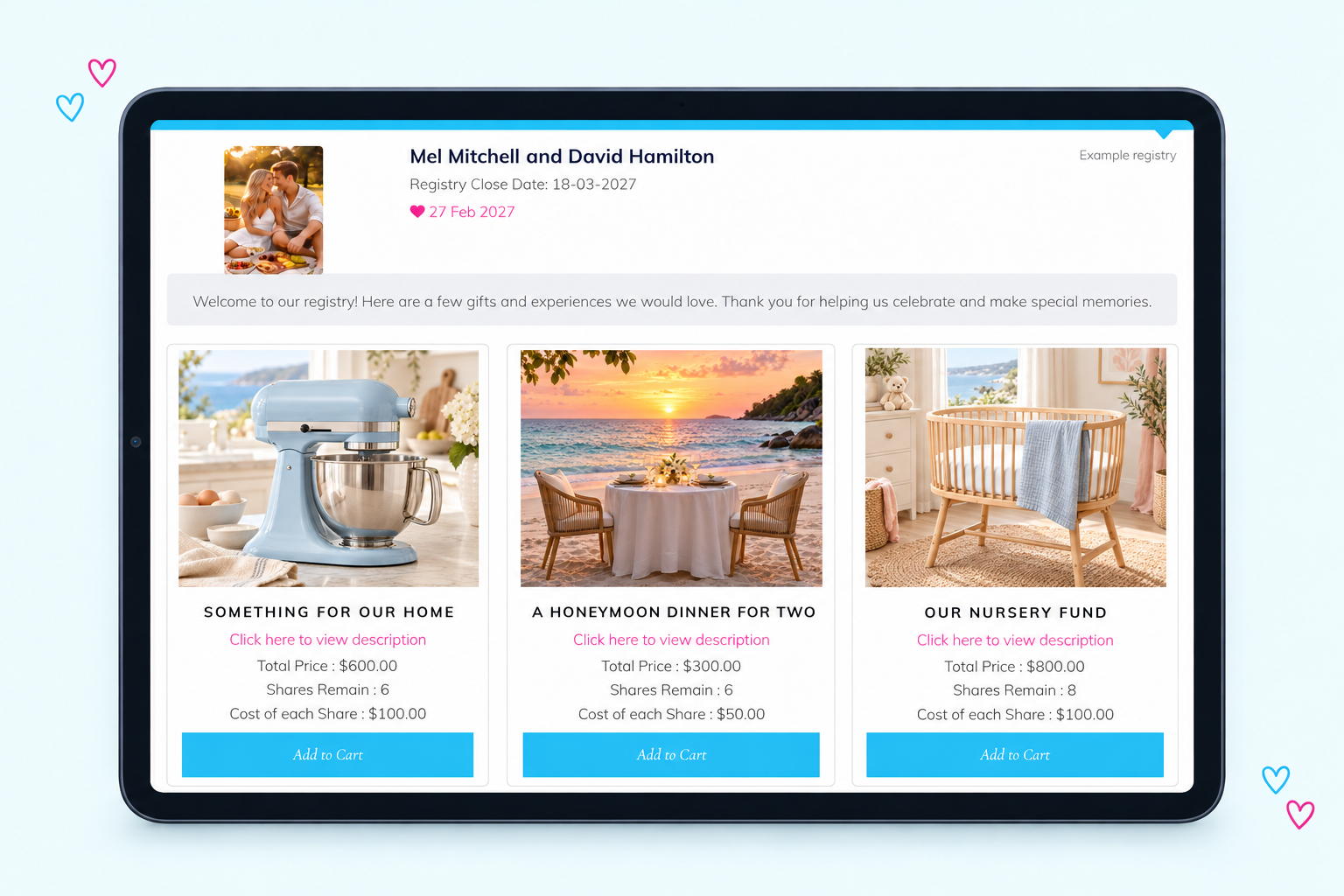
wedding registry gifts on a tablet

Wedding Wishing Well Wording Australia | 5 Examples

Almost 89% of the 320 nearlyweds surveyed by Easy Weddings said they would request cash gifts for their wedding. Already have everything? Feel awkward asking for cash as a wedding gift? The most considerate wedding wishing well wording Australia couples can use makes a cash gift optional, thanks guests for attending, and names a purpose such as a honeymoon or home fund.

Looking for a simple way to word your wedding wishing well? Choose a note that sounds like you, then swap in your own plans or registry link. These five examples cover a short invitation insert, a honeymoon fund, a home fund, a traditional wishing well and a wedding website.

Think of the examples as optional starting points, not scripts you have to follow. You can change the details, warmth and level of formality to suit your relationship and your plans for the day.

Key Takeaways

  • Make a cash gift optional, with no pressure to contribute.
  • Thank guests for celebrating with you, whether or not they give a gift.
  • Name the fund’s purpose, such as your honeymoon or a home.
  • Keep the wording warm, brief and true to your voice.

Choose the example that best fits your plans and adapt it to sound like you.

5 wedding wishing well wording examples for your invitations

A separate insert is a practical place for gift details, while a wedding website gives guests room to follow a link. Choose the format that suits your invitation and the amount of information you want to share.

Keep gift details off a formal main invitation when an insert or website is practical. That gives guests a clear place to find the information without making the invitation feel like a request for money.

Let the invitation lead with your celebration, and give gift details their own place.

Wedding wishing well wording you can copy and paste

Choose the example that suits what you’re saving for, then make it your own. These short messages work on a wedding invitation insert or your wedding website.

For a honeymoon fund

Use this when you’d love guests to help you make memories on your first trip as a married couple.

We’re so excited to celebrate with you. If you’d like to give a gift, we’d love a contribution towards our honeymoon and the adventures we’ll share along the way.

For a big-ticket item for your home

Use this when you’re saving for something you’ll use together, such as a sofa, an outdoor setting or a new appliance.

Celebrating with you is what we’re looking forward to most. If you’d like to give a gift, we’re saving for a new dining table and would love a contribution towards the place we’ll share many meals with family and friends.

For a house deposit

Use this when you’re saving for a home together and want guests to know what their gift would go towards.

Having you with us on our wedding day is all we could ask for. If you’d like to give a gift, we’re saving for a deposit on a home of our own and would be grateful for any contribution towards it.

Different formats work for different plans. A separate insert suits a printed invitation suite, while a short line can help when you have chosen a minimalist design.

A wedding website works well when guests need a link, more detail about a fund, or information that may change. Choose one clear place to share the details, then make it easy to find.

Put the gift note where guests can find it

A separate insert keeps your wishing well wording apart from the main invitation. It is useful when you want to include a warm note, explain a fund, or add a registry link without crowding the invitation.

The insert can sit with the invitation and other practical details. Use it for a short message and any essential information guests need to find the wishing well or wedding website.

For a minimalist invitation, a single, discreet line can direct guests to your wedding website. That approach suits couples keeping printed stationery simple, especially when the website holds travel, timing and gift information together.

Website wording gives you more room to explain what a fund is for and include a link. It can also help guests who misplace a separate card or want to check the details later.

Keep the formal main invitation focused on the date, place and celebration if another format is available. A separate insert or website lets guests read the gift note on its own terms.

A wedding magazine article offers a visual example of a QR-code card directing guests to wedding website information about the couple’s chosen charities. A QR code can be useful when you want guests to reach online details without printing a long web address.

Think about how guests will receive and use the information. Older relatives may prefer a printed insert, while other guests may find a website link quicker to keep on hand.

Make the route obvious: say where to find the details, then name the website or include its link. Guests should not have to guess whether the QR code leads to the registry, the schedule or something else.

For digital invitations, place the gift information near the practical details rather than burying it among unrelated pages. Guests can then find it when they are checking the date or venue.

Keep a cash request gracious and low-pressure

Start with gratitude for your guests’ presence, then make any gift clearly optional. A brief reason for the fund can make a cash request feel personal, rather than like an unexplained demand.

For example, you might say that contributions would go towards your honeymoon or help you make a new home together. Keep the explanation honest and specific enough to sound like your plans.

It also helps to separate your appreciation from the gift itself. Say that celebrating together matters most, then offer the wishing well as an option for guests who would like to give.

Use language that sounds like an invitation, not an instruction. Phrases such as “if you’d like” and “you’re welcome to” leave guests room to decide without feeling that their presence is not enough.

A wishing well should leave every guest free to celebrate with you without giving money.

The purpose can be simple. A honeymoon fund tells guests what their contribution supports, while a home fund gives them a sense of the plans you are making together.

Among couples planning a wishing well, 25% said they wanted to recoup some of their wedding spending. Another 22% said cash gifts would go directly into their honeymoon fund.

Those figures describe couples’ reasons for choosing a wishing well, not what guests should contribute. Your note can name your own purpose without referring to wedding costs or setting a target.

Almost 78% of nearlyweds said they felt completely comfortable asking for cash gifts instead of traditional gifts. That comfort does not mean every guest will feel the same, so optional wording still matters.

Guests contribute anywhere from $50 to $200 to a wedding wishing well, depending on their relationship with the couple and their personal circumstances. Treat that range as a description of varied gifts, not a suggested amount.

Among couples planning a wishing well, 44% expected guests to contribute $100-$150 per couple. Four per cent considered a gift of over $200 to be standard.

Traditional language can feel right for some couples, while others prefer a direct and modern note. Both can be gracious if the message stays appreciative and gives guests a genuine choice.

Consider how the wording sounds aloud. If it feels stiff or overly formal when you read it to each other, replace a phrase with one you would naturally use.

There is no need to apologise for choosing a wishing well. A friendly note can explain your preference without suggesting that traditional gifts are unwelcome or that guests owe you anything.

If you have a traditional wishing well at the reception, say where guests can find it. A simple location note is more useful than a long description of how the well works.

Adapt the wording to your plans

Use these five wording examples as a starting point, then change the fund and details to match your celebration. Keep the sentiment intact while making the practical information yours.

In the website example, replace “[insert your registry link]” with the address guests should use. Check that the link opens the right page and is easy to copy from a printed invitation.

If you do not want to share a registry link, direct guests to the relevant page on your wedding website instead. Use a short instruction that clearly names where the wishing well details are.

For a honeymoon fund, name the trip or the kind of experience you are saving for if that feels personal to you. There is no need to describe a full itinerary or promise how each contribution will be spent.

A home fund can be just as clear without listing items you plan to buy. A general reference to making your place feel like home keeps the note personal and flexible.

Wishing well wording for your reception or wedding website

Wishing well at the reception

Having you with us on the day is plenty. If you’d like to leave a card or contribute a gift, there’ll be a wishing well at the reception.

Wishing well wording for your wedding website

Your company on our wedding day is all we could ask for. If you’d like to give a gift, you’ll find our wishing well details here: [insert your registry link].

If you are using a reception wishing well, make sure the wording matches the setup on the day. Guests should be able to recognise the well and understand that leaving a card is also welcome.

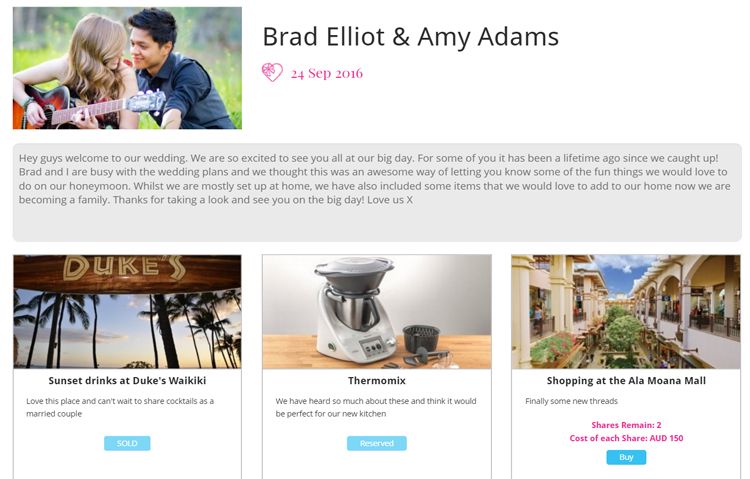
When using a registry service, choose a page that makes the available gift options clear. Some couples use a single shareable link for cash gifts, honeymoon funds, gifts from stores and experiences.

A wedding gift registry in Australia can give guests one place to view gift options and contribute online. Couples can manage contributions and thank-you messages through a dashboard.

Before sharing a registry page, review the wording guests will see after they follow the link. A clear fund name and a brief purpose can make the experience feel connected to your invitation.

If guests can contribute towards a larger gift, explain that option on the registry page rather than adding detail to a short invitation note. That keeps the printed wording focused and lets the website carry the extra information.

For a traditional wishing well, you may want the note to feel familiar and understated. The reception example offers that tone while still making the gift optional.

For a more personal message, use the honeymoon or home fund wording and mention the plan that matters most to you. Guests often appreciate knowing what a contribution will help you enjoy or create.

Ask each other to read the final version once before it goes out. That quick check can catch a fund name that has changed or a link that points to an old page.

Found wording you like? Copy it into your invitation or wedding website draft. If you’d like an online wishing well, explore the Sent With Love wedding registry.

Create your online wedding wishing well

Saving for your honeymoon, a new dining table or a home of your own? Set up your wishing well with Sent With Love and share the link on your wedding website or invitation insert. Guests can contribute online without creating an account.

Start your wedding wishing well