



Birthday Gift Ideas for Someone Who Has Everything
A thoughtful birthday wish list combines useful things with a few special treats, while leaving every guest free to give in their own way. What helps guests choose without taking the fun out of a surprise? A clear, personal steer gives them somewhere to start, while leaving plenty of room to follow their own ideas.
Whether you are planning a child’s party, an adult birthday or a milestone celebration, a few considered suggestions can make giving easier. A mix of wanted gifts, practical picks and things that feel special can suit family and friends with different relationships to the birthday person. Some guests will appreciate a clear idea; others will prefer to bring a surprise or simply celebrate together.
Treat the list as helpful inspiration, not a promise that every idea will be bought.
Key Takeaways
- Include a mix of useful gifts, personal treats and experiences.
- Keep every suggestion optional, with no expected spend.
- Choose ideas that match the birthday person’s interests and daily life.
- Use clear details so guests can find the intended item.
- Let guests give something unlisted or attend without a present.
What Is a Birthday Gift Registry, and Who Is It For?
A birthday gift registry is a shared guide to presents, experiences or contributions the birthday person would genuinely enjoy. It gives guests a clear steer, with ideas that can include direct product links, shared activities or a goal to support.
A contribution gift is money given by one or more guests towards a named purchase, experience or savings goal. A registry can combine three formats: physical presents, experiences and contributions towards a goal. Some online lists also let guests reserve or mark items purchased, which can help prevent duplicate gifts, though that feature is not universal.
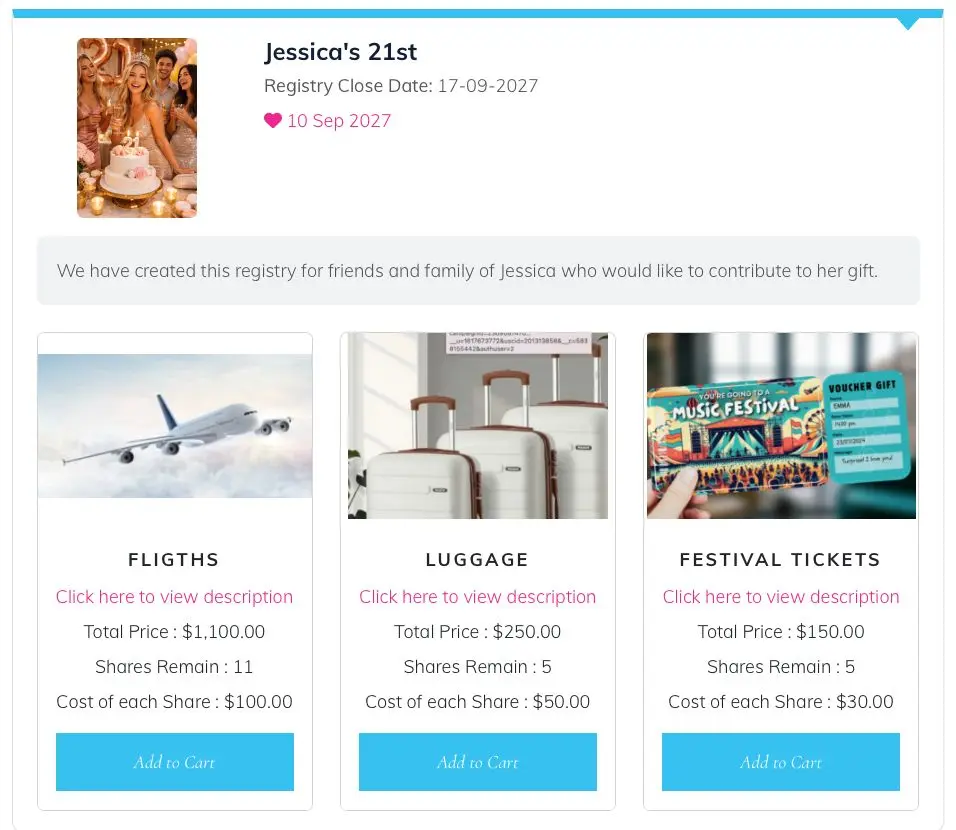
That flexibility can suit children whose parents are guiding gift choices, adults who prefer less clutter, or long-distance family who cannot join the celebration. A list can point relatives towards something useful without asking them to guess what is already owned. It can also help friends who want to contribute to an experience rather than wrap another object.
A birthday wish list is optional guidance, not a condition of attending or a promise that every idea will be bought.
Some birthday people would rather receive no presents at all. A registry should not be assumed to suit everyone, even when guests usually exchange gifts. A private list can help one household plan, while a shared one can make sense when friends or relatives ask for ideas.
Think about the birthday person’s comfort as well as the guests’ needs. A list that suits a family gathering may feel out of place for a low-key catch-up. Start one only if a clear list would make giving easier for both the birthday person and their guests.
Birthday Registry Ideas for Practical Gifts
A useful practical list starts with what the birthday person already enjoys or needs, rather than a generic bestseller. Familiar interests give guests a better chance of choosing something that will be used, kept or played with.
Toys, books and clothes are three practical categories that can help guests choose useful gifts. For a child, current interests and everyday needs narrow those choices more reliably than a broad age label.

Toys, books and games that suit their interests
Choose books around the subjects or stories the person already enjoys, such as animals, sport or funny adventures. A new book can be a welcome birthday gift when it builds on a favourite topic rather than guessing at a reading level.
Games work well when they match the way the household likes to play. A quick card game may suit a family that enjoys short rounds, while a cooperative game can give siblings or friends something to do together. Toys linked to an existing hobby, such as building or pretend play, often fit more naturally into the day.
For a child who loves drawing, for example, a toy that supports imaginative play may be more appealing than a popular item unrelated to that interest. A familiar interest is a better guide than an assumption based on age alone.
Clothes and useful everyday items
Clothing can be a good choice when the birthday person enjoys picking outfits and the host knows what they like to wear. Accessories or everyday items can also help when they answer a real need, such as replacing something worn out or supporting a regular activity.
Think about whether the person would welcome another item to store, wash or carry. A favourite style or a practical need makes a request more personal than a generic purchase. Choose items that have a clear place in the person’s daily life, play or existing interests.
Special Birthday Gifts That Create Memories
A birthday present can be a memory to make together, not just an item to unwrap. Shared time can feel more meaningful when the birthday person would rather do something than add another possession.
An outing, class or membership can be a better fit than another object when the person values experiences. A family that enjoys regular visits might appreciate a zoo membership, while an indoor playground pass could suit a child who likes active play.
Experiences to enjoy together or from afar
Consider a class that builds on an interest, or an outing the giver and birthday person can enjoy together. These gifts can create space for conversation and a shared story, especially when the giver sets aside time to join in.
Distance need not rule out an experience. A relative who lives elsewhere could arrange a subscription box that arrives at home, or give an activity the family can do together during a visit. A short note can explain how the gift will be enjoyed without turning the present into a task.
Choose an experience that fits the person’s routine and access needs. A class at a difficult time or an outing that requires too much travel may be less welcome than a simple activity close to home.
Keepsakes with personal meaning
A personalised book, framed photograph or item connected to a family tradition can hold more meaning than a decorative object chosen at random. A keepsake can be fitting for a first birthday, when families may want to remember the day and the people who shared it.
Ask what the birthday person or family would value before adding something made to keep for years. Pick a keepsake only when its personal meaning is clear to the birthday person or family.
Birthday Gift Ideas for Kids, Teens, Adults and Milestones
The best birthday request reflects the person’s stage of life and interests, not just the number on the cake. Personal taste matters more than an age label, even when a birthday marks a big change.
Use age as context, then let the birthday person’s preferences shape the choice. A birthday gift registry can help a family share useful ideas, but it should not turn a birthday into a set of age-based expectations.
Young children and family celebrations
For a first birthday, a parent-approved useful item or a simple book may suit the family better than a toy that needs a lot of room. By a third birthday, a child may have clear play interests, while a thirteenth birthday can call for choices that give them more say.
Age-appropriate play matters, but the child’s own interests still guide the best fit. Check with parents about what the child already owns and what works in the household. A family celebration can also include ideas that grandparents or relatives from afar can choose comfortably.
Teenagers and coming-of-age birthdays
Teenagers often have strong views that shift quickly. An experience with a friend, a choice tied to a current hobby or a flexible contribution can be more useful than a guess at a trend they may outgrow.
For a coming-of-age birthday, involve the teenager in deciding what feels right. Some will want a celebration with friends; others may prefer a quieter activity or a contribution towards something they are saving for. Let them choose how much of the list is shared.
Adults with established tastes
Adults often know which things fit their routines and which would become clutter. A practical upgrade to something they use, an experience they can share or a request connected to a known interest can feel thoughtful without being elaborate.
When tastes are well established, listen for a specific preference rather than choosing a near match. A small detail the person has mentioned can make an ordinary gift feel considered.
Milestone birthdays across generations
Birthdays like 18th and 21st celebrations can mark new independence, while a 30th may prompt a different kind of gathering. A considered list can also help guests choose for a 50th, 60th or 70th birthday, especially when family and friends have different ideas about what would be welcome.
Milestone birthday plans need not centre on a large present. The birthday person may prefer a meal, an outing or simply time with relatives. For birthdays like 18th celebrations, ask what the person wants before assuming the occasion calls for a particular kind of gift.
Age can shape the setting, but it does not define the person. Check with a parent or the birthday person before adding anything that depends on age, fit or personal preference.
Should You Ask for Money or a Group Gift?
Money or a group gift can be a thoughtful choice when guests know what their contributions will help make possible. A named purpose helps people decide whether they want to take part.
Guests can give money as an individual present, contribute towards one shared goal or join a group gift. A group gift combines contributions from several guests into one present or experience, with one person helping coordinate it.
Contributions towards one meaningful goal
Name the goal clearly, such as a trip, a class or a larger item the birthday person wants. Guests can then see what a contribution gift supports instead of being asked to hand over money without context.
A clear purpose does not require a fixed amount. One guest may contribute on their own, while another may prefer to give a small amount alongside a card. Keep the invitation to contribute open, so people can decide without feeling that they must meet a target.
A contribution gift works best when the goal matters to the recipient, not just because it is convenient for the organiser. If the birthday person would rather receive a personal present, a money request may not feel right.
Coordinating a shared present
For a group gift, choose one organiser to collect responses and keep the plan clear. That person can explain what the group is considering, how guests can opt in and what happens if someone prefers to give separately.
Give guests room to take part without turning the gift into a test of friendship. A couple or a close group may want to agree on the plan before contacting others, especially if guests have different budgets or relationships with the birthday person.
The organiser should avoid implying that everyone needs to contribute the same amount. Make it clear that a smaller contribution or no contribution is equally welcome.
How to Balance Gift Prices and Budgets
A considerate birthday list offers options at different price levels without implying a minimum spend. Real choice means guests can select something that feels right for their budget and relationship with the birthday person.
Use three broad price bands: lower-cost, mid-range and higher-cost, without assigning a fixed amount. The bands help show that a list can include a range of gifts, while leaving guests to decide what they want to spend.
A mix can include a small treat, a useful present and an experience or larger request. Describe the kinds of gifts rather than attaching Australian dollar amounts to each band. Guests should choose an amount that fits their own budget and their relationship with the birthday person.
| Price band | Example kinds of gifts | Why include it |
|---|---|---|
| Lower-cost | Small book, card game or craft item | Offers an easy choice for guests spending modestly |
| Mid-range | Useful accessory, family activity or hobby item | Gives guests a practical option with room for choice |
| Higher-cost | Membership, class series or larger shared item | Lets willing guests choose a more substantial present |
The table is a guide to variety, not a ranking of how much someone cares. Friends and relatives may have different ideas about gifts, and a guest should not need to explain their budget. A wide range of options lets each person choose what feels comfortable.
A common mistake is loading the list with only expensive requests. That can leave guests with no suitable option, even if the birthday person has no expectation that every request will be filled. Review the full range and remove any item that would make a guest feel pressured.
Birthday Gift Registry Etiquette for Hosts and Guests
A registry feels most considerate when it helps guests who want ideas and asks nothing of those who do not. Optional guidance keeps a list useful without making it feel like an entry fee for the celebration.
A birthday wish list should remain optional and should never be a condition of attending. Guests can choose a listed gift, give an unlisted alternative or simply come along without bringing a present.
Sharing a list as an optional guide
Share a list when someone asks for ideas or when it suits the group’s usual way of planning. A host can add a short note or text saying the ideas are there for anyone who finds them helpful, with no expectation to buy from them.
Think about the birthday person’s comfort before sending a list broadly. A family member may be happy to share suggestions with close relatives, while a friend group may prefer to ask privately. Keep the wording warm and plain, rather than presenting the list as a set of instructions.
- Keep the wording optional.
- Thank guests for attending.
- Respect each guest’s budget.
- Let guests choose an unlisted gift.
Choosing a gift as a guest
As a guest, you can pick something listed if it suits you, choose a personal alternative or attend without a gift. The list is a starting point, not a test of how well you know the birthday person.
If you select an unlisted present, trust your knowledge of the person and their preferences. A simple card or time together can also be a kind way to mark the day. If the birthday person’s circumstances or the group’s norms make a list uncomfortable, leave it private and share ideas only when asked.
How to Create an Online Birthday Gift Registry
A useful online birthday list needs a clear set of gift ideas, accurate details and one easy way for guests to open it. Simple access matters more than adding every feature a service offers.
A simple online setup has four steps: create the list, add gift ideas, check the details and share one link. Start by entering the birthday person’s name and date, then add ideas with preferences that help guests choose.
Check the list before sharing it
Read the page as a guest would. Check the birthday person’s name and date, make sure each idea is understandable, and confirm the link opens the right place. Remove anything that no longer suits the person or occasion.
| Step | What to do | Check |
|---|---|---|
| Create the list | Enter the birthday person’s name and date | Name and date are correct |
| Add gift ideas | Include chosen items and useful preferences | Each idea is clear to a guest |
| Check the details | Review the page and open its links | Links lead to the intended item |
| Share one link | Send the list by text, email or invitation | Guests can open the shared page |
Features such as reservations or purchased-item marks depend on the service, so check what the chosen list can do. Open the shared link as a guest before sending it to family or friends.
What Details Make Each Gift Request Easy to Buy?
Each entry should give guests enough detail to find the right thing without a follow-up text. Useful specifics reduce guesswork while leaving the guest free to decide whether to choose that gift.
Five useful listing details are the item link, size, colour, preferred variation and a short note. Not every gift needs all five, so include only the details that matter for that item.
- Item link: use a direct link that opens the intended item.
- Size: add the clothing size or other fit detail that matters.
- Colour: name the colour the birthday person prefers.
- Preferred variation: specify the edition, model or version wanted.
- Short note: explain why the item is wanted or clarify a key detail.
A working link is especially helpful when similar products have different versions. Check that it leads to the intended item, rather than a general shop page or a search result. Clothing sizes and colours can help guests select a more suitable present, particularly when a person has a clear preference.
Photos can help guests recognise an item, but they should not replace a working link when the exact product matters.
For a gift without a direct link, a short description can still identify what the birthday person has in mind. Avoid adding personal details that guests do not need, especially on a list shared beyond close family. Test every link and remove details that are no longer accurate.
How to Organise and Share the Birthday List
A birthday list is easier to use when guests can spot the kind of gift they want to give at a glance. Clear categories help family and friends scan the ideas without reading every entry first.
Four useful categories are practical items, fun gifts, experiences and contributions or group gifts. Put the categories most useful to your guests near the top, then keep the list short enough to scan on a phone.
- Practical items for gifts that meet an everyday need.
- Fun gifts for playful or light-hearted choices.
- Experiences for activities the birthday person can enjoy.
- Contributions or group gifts for a named shared goal.
Separate ideas for each birthday person if a family list covers several celebrations. A guest should be able to tell whose preferences apply before choosing something. Keep the category names plain, so an older relative or a friend who is new to the list can find their way around.
Online lists that mark reserved or purchased items can help reduce duplicates. The feature is useful when many guests are choosing from the same set of ideas, though it is not universal across services.
A paper list or shared note needs manual updates. One person can cross off an item when a guest claims or buys it, then tell the group the list has changed. Assign one person to update a manual list as soon as a guest claims or buys an item.
Keep a Family Birthday Registry Useful Year After Year
A family birthday list stays useful when someone checks it before each person’s birthday rather than leaving old ideas untouched. A regular review helps relatives remember what each person likes without treating last year’s requests as current.
Review an ongoing family list once during each annual birthday cycle. A shared family list can bring together ideas for more than one birthday, as long as each person’s preferences stay clearly separate.
- Remove items the person already owns or no longer wants.
- Confirm sizes and preferences before the birthday arrives.
- Update links so they still lead to the intended item.
- Keep each family member’s ideas separate.
One person may be happy to share a list with grandparents, cousins and close friends, while another may prefer to keep their ideas private. Let each birthday person control what they share, even when the family uses one place to organise several celebrations.
Separate headings or pages can stop one person’s requests being confused with another’s. That matters when relatives plan birthdays close together or when family members have similar interests. A list should help guests remember personal preferences, not make everyone’s choices look interchangeable.
Keep each person’s ideas separate, and let that person decide which parts of the family list they want to share.
Remove stale requests before a new round of birthday planning begins. A quick check can catch a changed size, an item already bought or a link that no longer opens the right product. Set aside one review before each birthday to remove stale requests and confirm the details still fit.
Conclusion
The most thoughtful birthday wish list is personal, easy to use and comfortable for guests to ignore if they prefer. It reflects the birthday person, gives family and friends genuine choice, and keeps every contribution optional.
A practical next step is to write down a few wanted items and one experience. Share those ideas only with people who ask or would welcome them. Start with a short list of things the birthday person would truly enjoy, then share it warmly and without expectation.